
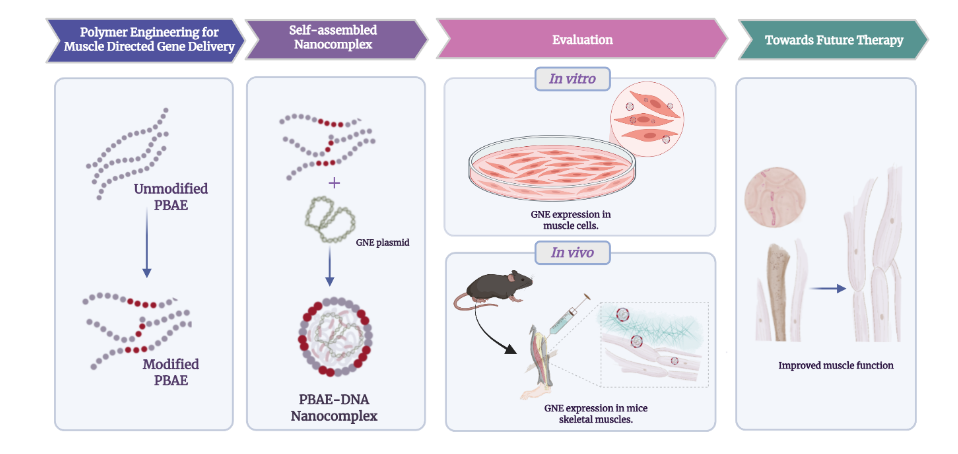
Artificial nanoparticles are designed to form small particles spontaneously. During particle formation, the GNE gene is encapsulated so the DNA is not exposed. It allows delivery of the DNA to tissues.
Delivering a therapeutic gene to diseased tissues is a valid approach to treating genetic disorders. A safe, scalable, economical and efficient delivery method is the necessary first step to achieve this. Other approaches use viruses, but they come with complications, including safety issues. Although many viral gene therapy systems are on the market for different diseases, they face major challenges, including extremely high production costs, patient deaths, and immune responses.
Dr Ganguli’s group developed the first polymeric non-viral gene delivery system based on a ligand-modified poly(β-amino ester) (PBAE) designed for GNE gene delivery to muscle. It efficiently delivers and overexpresses the GNE gene in vitro in a mouse skeletal muscle cell line and delivers it in vivo via intramuscular injection in C57BL/6 mice, with minimal accumulation in the liver.
The delivery system does not elicit in vitro toxicity or in vivo immunogenicity and can be an effective option for gene delivery in GNE myopathy. The group is gearing up to carry out preclinical work before seeking approval for clinical trials.