
This prospective observational study, led by Dr Seena Vengalil and Dr A Nalini at NIMHANS, Bengaluru, investigates the natural history of GNE myopathy in Indian patients. The study began in October 2024 with a target of 50 participants; more than 70 have been enrolled to account for attrition. It aims to document disease progression through six-monthly examinations of functional ability, muscle strength, and muscle MRI to assess muscle loss. The study will also help determine genotype–phenotype correlations and identify biomarkers to understand disease biology better. Each participant will be assessed over three years.
Patients underwent detailed evaluation using standard tools: GNE Myopathy Functional Rating Scale (GNEMFAS), Inclusion Body Myositis Functional Rating Scale (IBMFRS), Barthel index, Brooke score, and modified Rankin scale(mRS) and evaluation of muscle strength by Manual muscle testing, grip power, and Jebsen-Taylor hand function test, Manual Muscle testing was done for all upper limb and lower limb muscle groups , the 6-min walk test for lower limb was done. Lung capacity was assessed using Pulmonary Function tests (PFTs). GaitRite analysis was done using the GaitRite system.
Muscle MRI of lower limbs was performed in all patients using the Dixon protocol to determine the degree of fatty infiltration in various muscle groups.
Blood and urine samples collected at each visit are stored for biomarker discovery using proteomics and metabolomics, conducted under the guidance of Dr Rajesh Iyer at TIGS. This study will provide critical insights into disease progression, functional decline, and potential therapeutic targets for GNE myopathy in the Indian population.
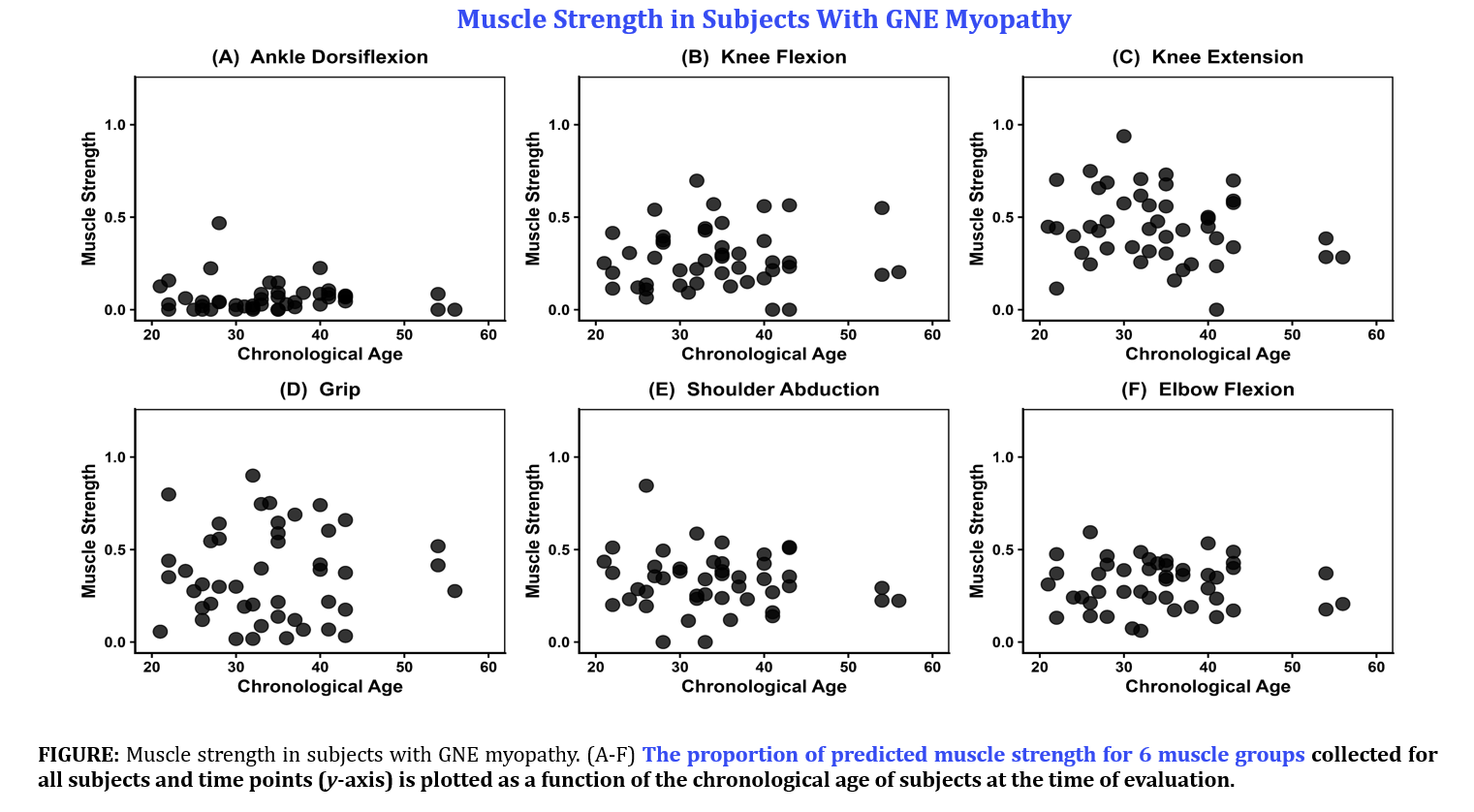
Preliminary analysis of first visit data: The analysis is designed to generate a statistical model of disease progression at the end of the project. We will also generate individual patient progression data for use in the drug trial.