FEB-RARE-UARY '25

FebRAREuary 2025

Feb-RARE-uary 2025 is themed Turning Rare into Art.

We use the power of visual arts to depict what it is like to live with a rare disease and the challenges that people living with rare diseases face. We have created four original comics on various issues impacting rare diseases. We also display the art created by people living with rare diseases, which shows their lived experiences of rare disease. We believe that art is a powerful medium to generate visibility for and unpack the complexities of rare diseases. Please do help us spread the word by sharing our campaign.
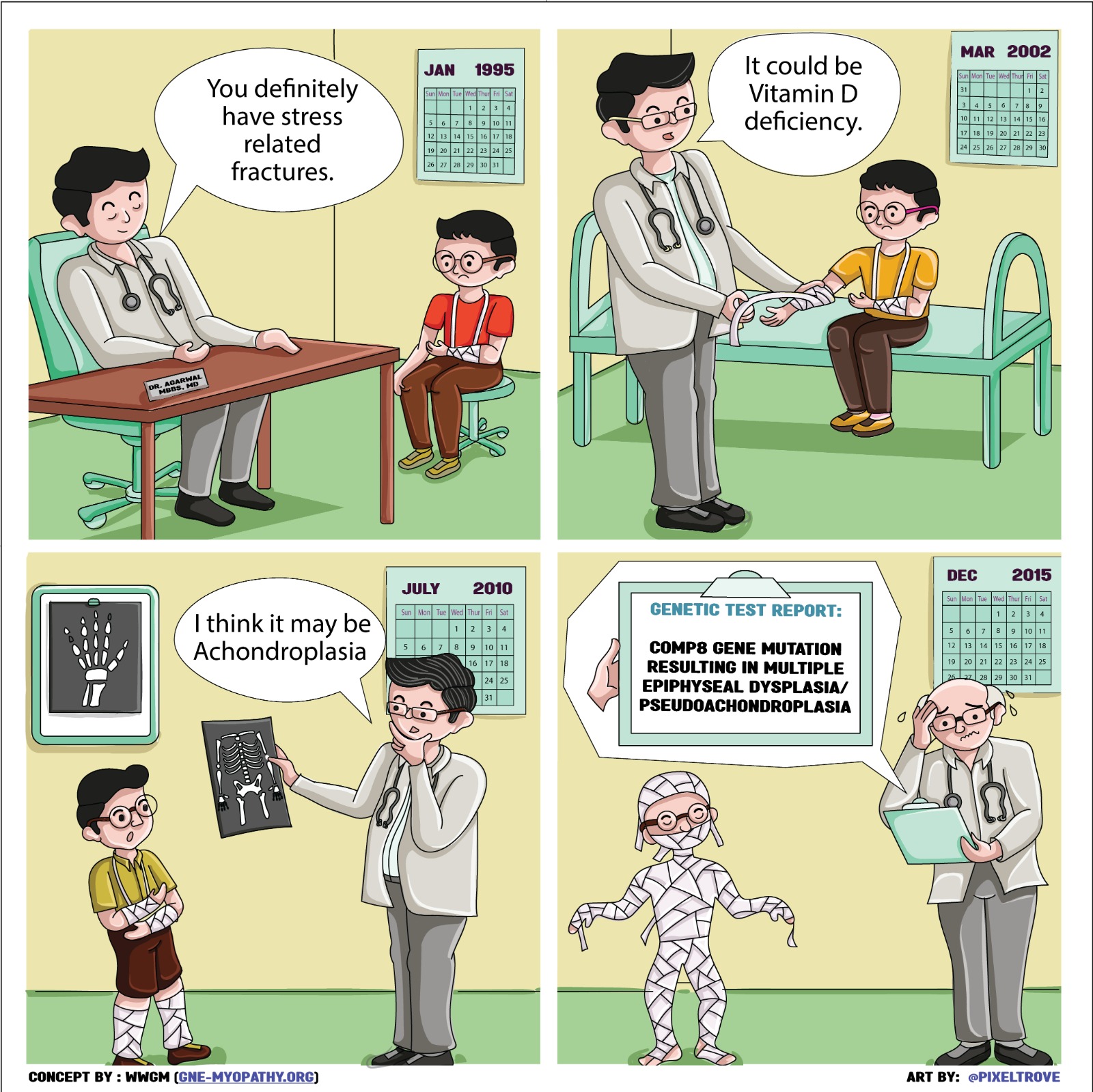
Panel 1: * The first panel shows a doctor is sitting at his desk wearing a stethoscope. * The patient a small boy sits across from him, looking concerned and has a cast over his left hand. * Speech bubble for the doctor says “You definitely have stress related fractures”. * The calendar behind the patient shows the year as 1995. Panel 2: * The second panel shows the doctor with bigger tummy, standing and putting the cast on the right hand of the patient. * Left hand of the patient is still covered with a cast and the patient looks sad. * Speech bubble for the doctor says “It could be a vitamin-D deficiency”. * The calendar behind the patient shows the year as 2002. Panel 3: * The third panel shows the aging doctor holding a X-ray and facing the patient. * Speech bubble for the doctor says “I think it may be achondroplasia”. * The patient is aged a bit but still small, has all the limbs covered with casts and looks surprised. * The calendar behind the patient shows the year as 2010. Panel 4: * The aged doctor is scratching his head looking genetic test report. * The genetic test report reads “COMP8 gene mutation resulting in Multiple epiphyseal dysplasia/ Pseudoachondroplasia”. * The patient, still same size is covered from head to toe with casts like an Egyptian mummy. * Year behind the doctor says 2015.

Diagnosis

Diagnosing a rare disease can often be a big struggle - taking many years and involving multiple misdiagnoses.
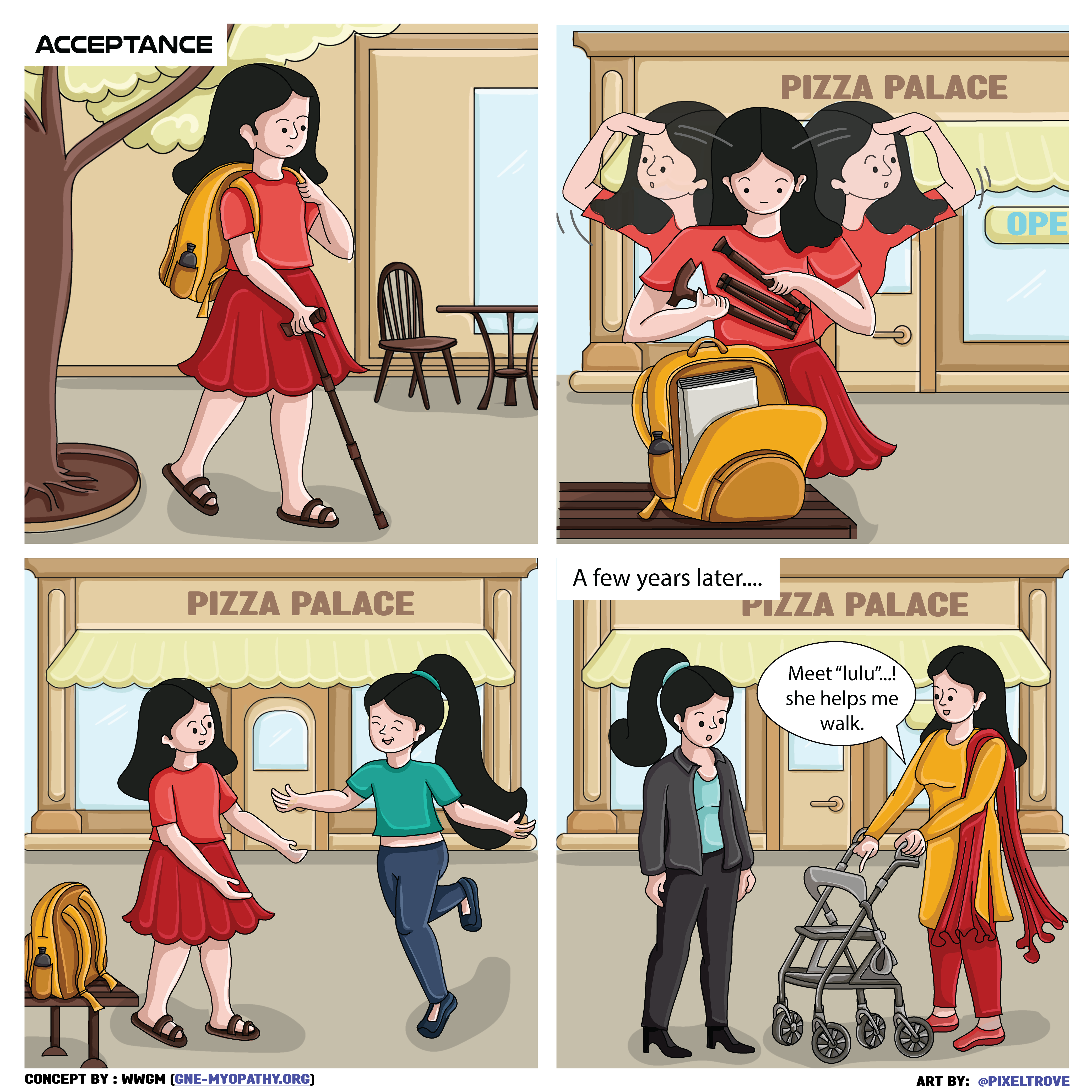
Panel 1: A young girl in red dress wearing a yellow bag is walking with the help of a walking stick. Panel 2: She is seeing if anyone’s looking and hiding her folding walking stick inside the bag. The board in the building behind her reads ‘Pizza Palace’. Panel 3: She is happily welcoming her friend in green dress. Panel 4: A few years later, in front of Pizza Palace. Now as an adult the girl is pointing to her walker and says “Meet lulu, she helps me walk”. Her friend is looking surprisingly at the walker.

Acceptance

Living with a rare disease often means learning to live with disability, which can be very hard
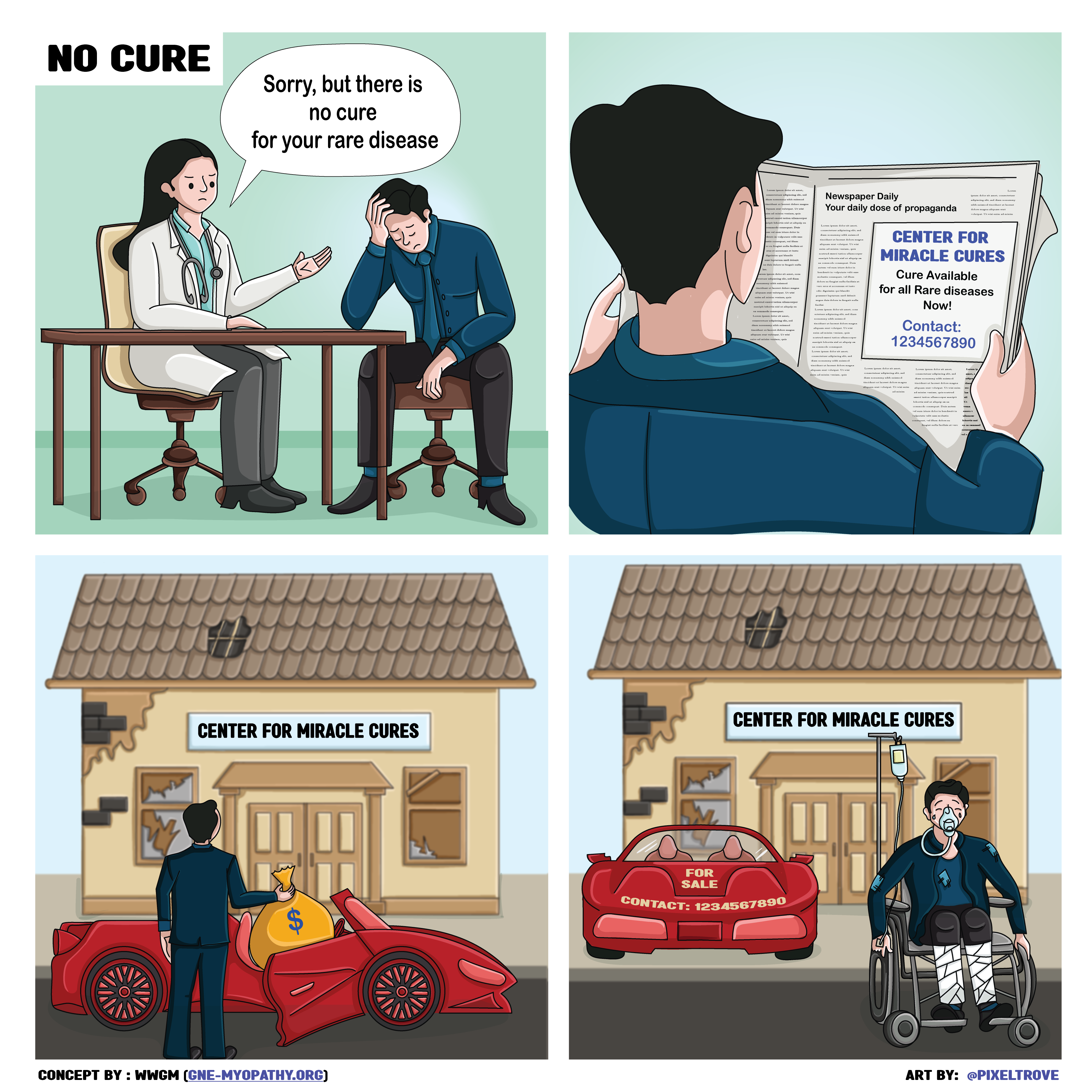
Panel 1: Doctor tells a patient (man) that there is no cure for his rare disease. The patient is visibly sad. Panel 2: The patient is seen reading a newspaper, The newspaper reads - Newspaper Daily - Your daily dose of propaganda. An advertisement in the newspaper reads - CENTER FOR MIRACLE CURES, Cure Available for all Rare diseases Now! Contact: 1234567890 Panel 3: A decrepit building with a board, The board reads “CENTER FOR MIRACLE CURES” The patient is standing next to a fancy car with a bag of money and is facing the building. Panel 4: The patient is coming out of that building in a wheelchair with tears flowing from his cheeks, an oxygen mask over his face, a drip line attached to his hand and casts over his legs. There is a ‘For SALE, CONTACT: 1234567890’ sign on his car.

No Cure

People living with rare diseases find it hard to face the prospect of life with a severe disease with no treatments. This vulnerability is exploited by scammers peddling fake cures or making false claims about treatments.
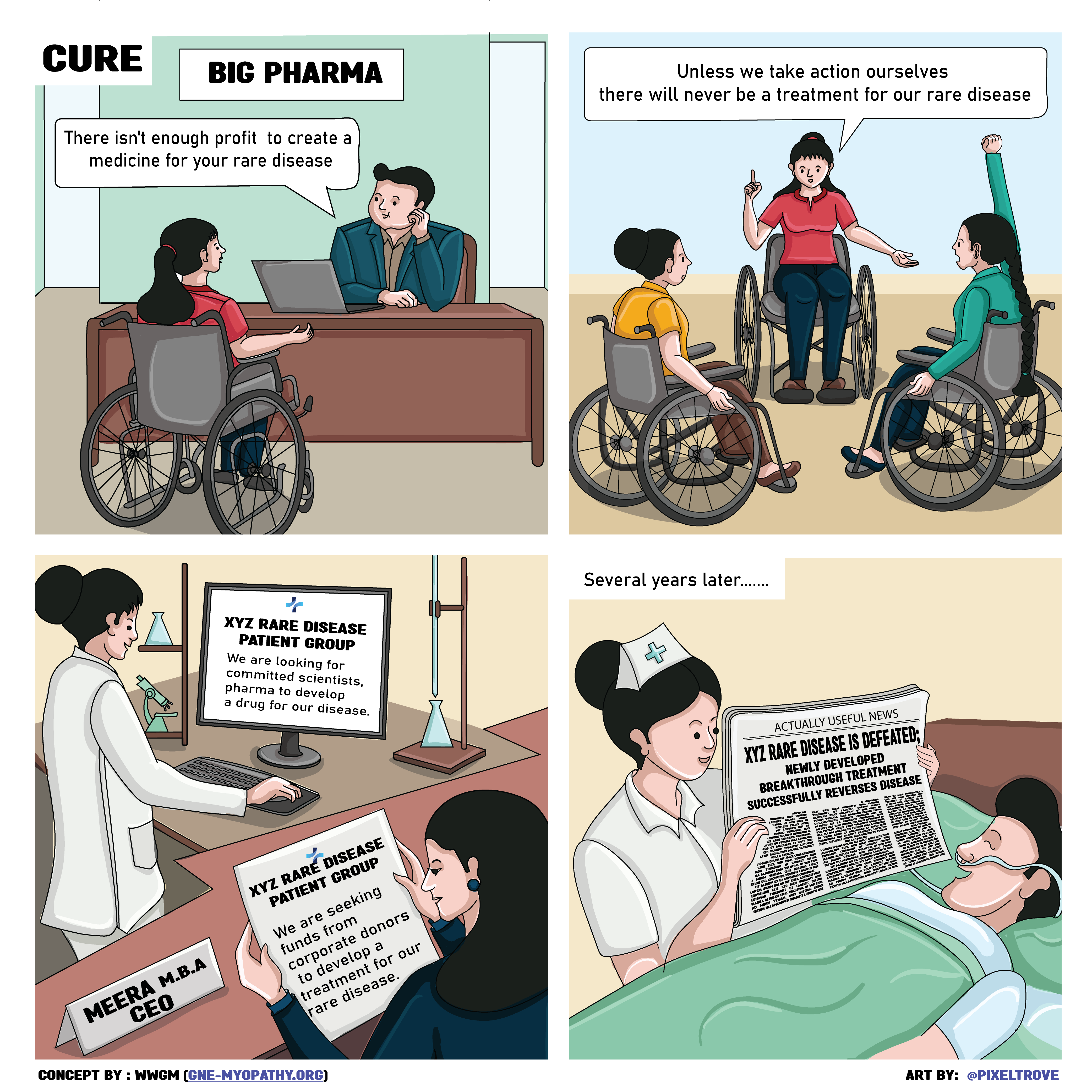
Panel 1: A man in a corporate suit tells a woman in a wheelchair, “There isn’t enough profit to create medicine for your rare disease.” The wall behind him reads “BIG PHARMA.” Panel 2: The same woman speaks to two other women in wheelchairs, saying, “Unless we take action ourselves, there will never be a treatment for our rare disease.” One woman raises her fist in determination. Panel 3: Split diagonally. On one side, a woman scientist reads a monitor displaying, “XYZ RARE DISEASE PATIENT GROUP seeks committed scientists and pharma to develop a drug.” On the other, a suited woman, identified as Meera M.B.A., CEO, reads a pamphlet stating, “Seeking funds from corporate donors to develop treatment.” Panel 4: Years later, a nurse joyfully shows a newspaper to a bedridden patient with an oxygen line. The headline reads, “XYZ RARE DISEASE DEFEATED; breakthrough treatment reverses disease.” The patient smiles.

Cure

Acceptance

Living with a rare disease often means learning to live with disability, which can be very hard. Panel 1: A young girl in red dress wearing a yellow bag is walking with the help of a walking stick. Panel 2: She is seeing if anyone’s looking and hiding her folding walking stick inside the bag. The board in the building behind her reads ‘Pizza Palace’.

Cure

When people living with rare diseases and their loved ones come together, they can forge a path towards a cure. Panel 1: A man in a corporate suit tells a woman in a wheelchair, “There isn’t enough profit to create medicine for your rare disease.” The wall behind him reads “BIG PHARMA.”

Diagnosis

The comic depicts a doctor’s examination of a patient. The images are arranged in a series of four panels, each showcasing a different stage of the doctor-patient interaction. Panel 1: * The first panel shows a doctor is sitting at his desk wearing a stethoscope.

No Cure

People living with rare diseases find it hard to face the prospect of life with a severe disease with no treatments. This vulnerability is exploited by scammers peddling fake cures or making false claims about treatments. Panel 1: Doctor tells a patient (man) that there is no cure for his rare disease. The patient is visibly sad.

No Cure

People living with rare diseases find it hard to face the prospect of life with a severe disease with no treatments. This vulnerability is exploited by scammers peddling fake cures or making false claims about treatments. Panel 1: Doctor tells a patient (man) that there is no cure for his rare disease. The patient is visibly sad.